

POM-C or PE: which material for a machined part?
Application, shape and dimensions all matter when choosing an engineering plastic. See when POM-C, PE 500 or PE 300 may be a starting point and what to include in an enquiry.
Choosing an engineering plastic starts with the application, not just the thickness. POM-C, PE 300 and PE 500 have different properties, so it helps to describe what the finished part must do.
What will the part be used for?
POM-C is a useful starting point for bushings, spacers and other machined components where stiffness and dimensional stability matter.
PE 500 may suit sliding guides and strips. Consider the load and the material that will move across the surface.
PE 300 can be a starting point for cut flat parts. If the part will contact chemicals, state the substance, concentration and operating temperature so that material suitability can be checked.
Sheet or rod?
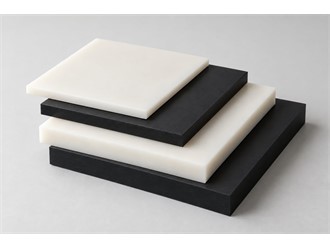
Start with sheet for flat parts and rod for round ones. We offer POM-C and PE in different colours and stock sizes. For PE, check the specific grade designation: PE 300 or PE 500.
What should your enquiry include?
- the intended use and operating conditions;
- finished dimensions, tolerances and quantity;
- preferred stock shape, colour and any machining required;
- a sketch or drawing if the shape is more than a simple rectangle or cylinder.
You can email a sketch or drawing to [email protected].
Explore our engineering plastic sheets and rods. If you are unsure which material to choose, describe the application in your enquiry and we can review the options with you.
